Tooth Extractions Duluth MN
Tooth Extractions
Sometimes saving a tooth is the best treatment. Sometimes removing it is.
Teeth may need to be removed because of extensive decay, fracture, periodontal disease, infection, or a poor long-term prognosis. In our practice, extractions are also commonly performed as part of a larger restorative plan—for example, before a bridge, partial or complete denture, or implant-supported restoration.
An extraction isn’t the entire treatment plan. What comes next matters.
Before removing a tooth, Dr. Esguerra considers not only whether a tooth can or should be saved, but also how the area will ultimately be restored.
Planning Before the Tooth is Removed
Removing a tooth changes the bone and soft tissue that once supported it. After an extraction, the surrounding bone naturally remodels and decreases in volume.
When preserving the shape and volume of the site is important, Dr. Esguerra may recommend socket preservation, also called bone grafting. A bone graft is placed into the extraction site and may be protected with a resorbable membrane while the area heals.
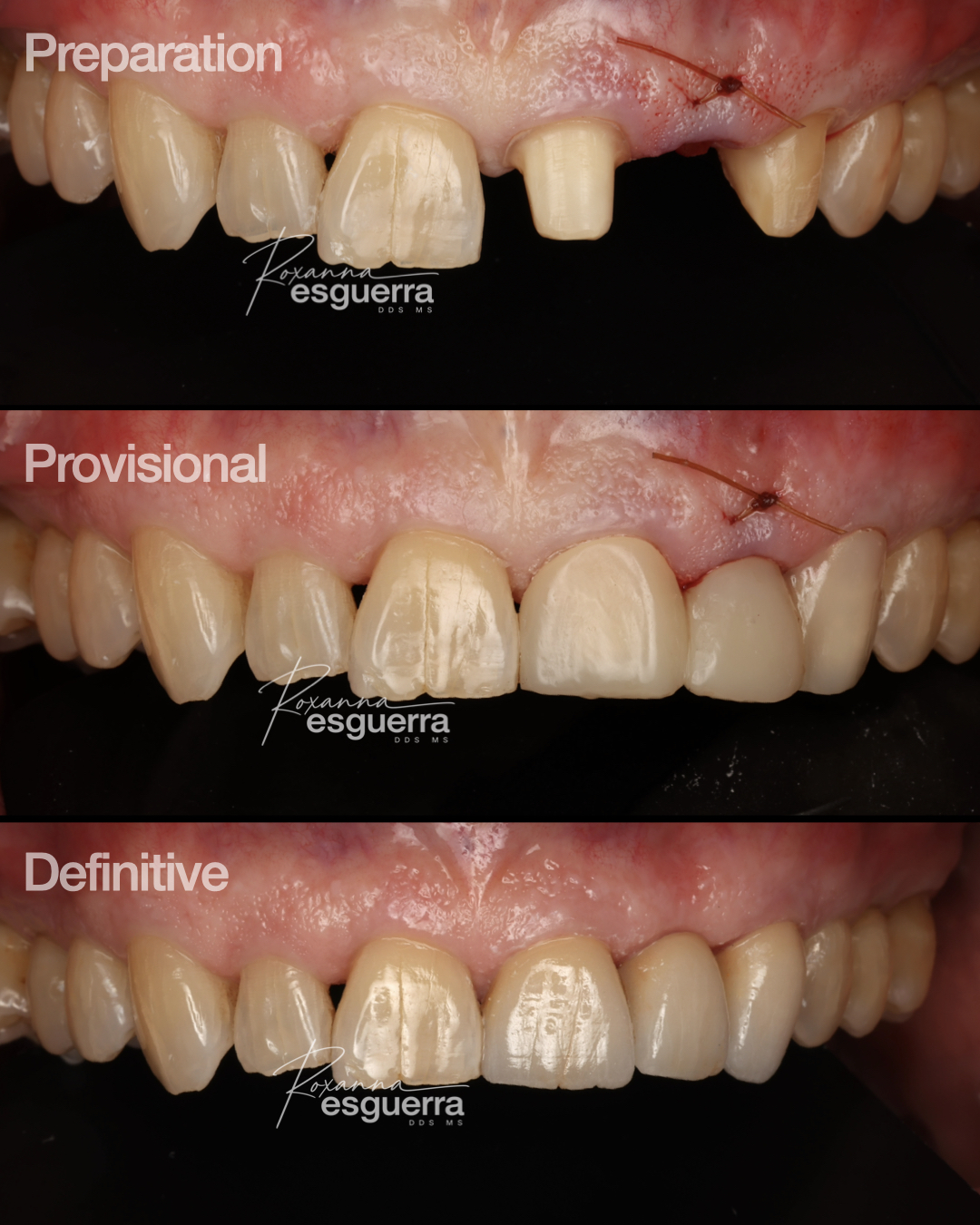
Bone preservation isn’t only for dental implants. Maintaining the ridge can also improve the foundation and contours for a dental bridge, partial denture, or complete denture. Pontic sites—the areas beneath replacement teeth in a bridge—may also be grafted when preserving the shape of the ridge will improve the final restorative result (refer to photo series below).
What Happens During an Extraction?
The area is thoroughly numbed with local anesthetic before treatment begins. You may feel pressure or movement during the procedure, but you should not feel sharp pain. If you are uncomfortable at any point, let us know.
Some teeth can be removed in one piece. Others are more safely and conservatively removed by dividing the tooth into smaller sections or by carefully removing a small amount of surrounding bone.
When needed, Dr. Esguerra also performs pre-prosthetic procedures, such as reshaping irregular bone or removing tori or exostoses, to create a healthier and more favorable foundation for the planned restoration, one phase at a time.
Do You Need A Tooth Removed?
Let us help you heal! Our caring staff is here to help you if you have any questions!
Comfort During Treatment
Most extractions can be comfortably completed with local anesthetic alone.
For patients who are anxious about treatment, an oral anti-anxiety medication may be appropriate. For larger surgical procedures, IV sedation may also be available with an anesthesia provider. We will discuss the appropriate option based on the procedure, your medical history, and your individual needs.
Replacing a Tooth After Extraction
Not every extracted tooth needs to be replaced. When replacement is appropriate, however, it is best to consider the final restoration before the tooth is removed whenever possible.
Depending on your individual situation, treatment may involve a dental implant, bridge, partial denture, complete denture, or another restorative solution. Planning ahead allows the extraction, bone preservation, healing, and final restoration to work toward the same goal.
Immediate Dentures
When multiple teeth need to be removed, an immediate denture can sometimes be made in advance and placed on the same day the teeth are extracted. This allows patients to leave with teeth while the tissues heal and change.
Immediate dentures require follow-up care and adjustment as the gums and underlying bone remodel during healing.
Full-Arch Implant Treatment
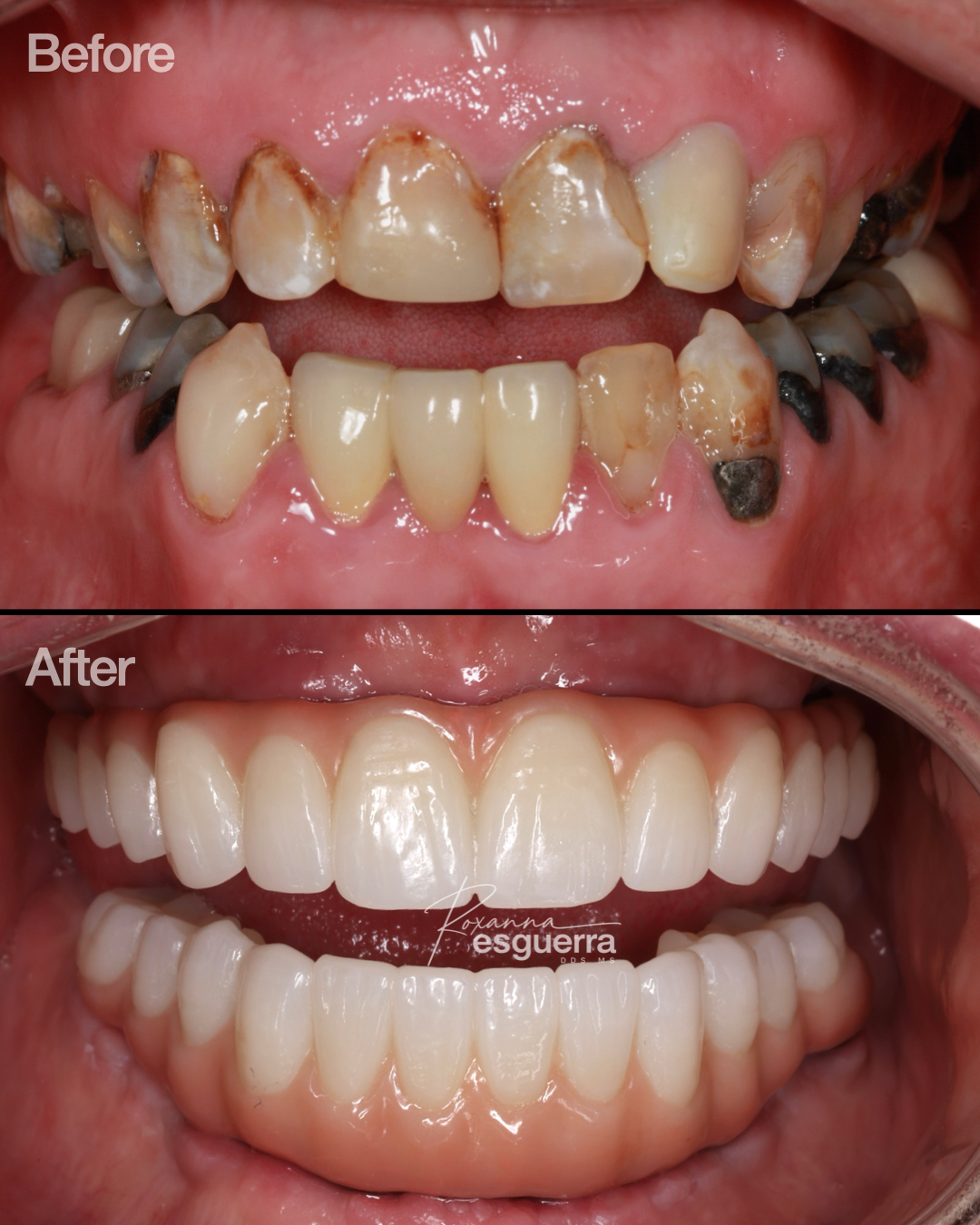
For selected patients undergoing full-arch treatment, extractions, bone preparation, implant placement, and delivery of a fixed provisional restoration may sometimes be coordinated as part of the same treatment (refer to photos below).
Learn more about our Implant-Retained Denture and Fixed Implant Solutions →
After Your Extraction
Some soreness, swelling, and minor bleeding are normal after an extraction. Before you leave, we will review instructions specific to your procedure.
Protect the blood clot. For the first 24 hours, avoid vigorous rinsing or spitting, drinking through a straw, smoking, and other activities that can disturb the extraction site.
Control bleeding. Bite firmly on the provided gauze as directed. Mild oozing is expected initially. Contact our office if bleeding remains heavy or cannot be controlled.
Manage swelling. Ice applied intermittently to the outside of the face can help during the first day following surgery.
Manage discomfort. Acetaminophen and/or ibuprofen are appropriate for many patients and will be recommended when medically appropriate. Prescription medication, including medication for breakthrough pain, may be provided when needed. Antibiotics are prescribed only when clinically indicated.
Eat carefully. Choose softer foods initially, avoid very hot foods and beverages, and chew away from the surgical area when possible.
Keep the area clean. Avoid brushing directly over the extraction site on the first day. Beginning the following day, gentle brushing and warm salt-water rinses can help keep the area clean unless you have been given different instructions.
Dry Socket
A blood clot normally forms within the extraction site and protects the underlying bone during early healing. If that clot is lost or breaks down prematurely, a painful condition called dry socket can develop.
Dry socket most commonly causes increasing or significant pain several days after an extraction and may be accompanied by an unpleasant taste or odor. If your discomfort is getting worse rather than better, please call our office. Dry socket can be treated to make you more comfortable while the site heals.
Healing After an Extraction
The gum tissue begins healing quickly, but the bone beneath it continues to remodel for weeks to months. The amount and pattern of healing depend on the tooth removed, the condition of the surrounding tissues, whether bone grafting was performed, and the planned restoration.
This is another reason we prefer to think beyond the extraction itself.
What comes next matters.