Cleft Lip and Palate Duluth MN
Cleft lip and cleft palate are among the most common conditions affecting development of the face and mouth, with cleft lip and/or palate occurring in approximately 1 in 700 births.
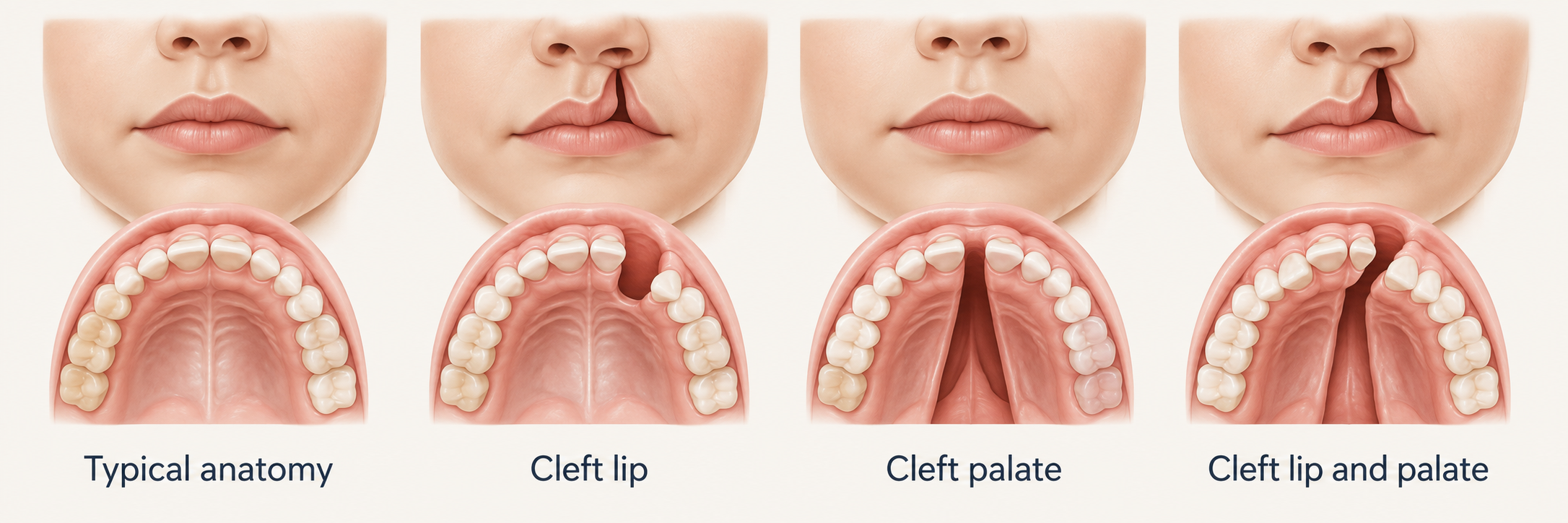
A cleft lip occurs when the tissues that form the upper lip do not completely join during development. The cleft may involve the lip alone or extend into the gum and bone of the upper jaw.
A cleft palate is an opening in the roof of the mouth that occurs when the tissues forming the palate do not completely join. It may occur on one side or both sides and can occur with or without a cleft lip.
Treatment often begins in infancy and continues at different stages through childhood, adolescence, and adulthood. Depending on the patient’s needs, care may involve surgeons, orthodontists, speech-language pathologists, pediatric and general dentists, and prosthodontists.
Cleft lip and cleft palate can occur separately or together and may involve the lip, gum, bone of the upper jaw, and/or roof of the mouth.
The Role of a Prosthodontist
A prosthodontist is a dentist with advanced specialty training in restoring and replacing teeth. Patients with a history of cleft lip or palate may have missing or malformed teeth, altered bone and gum anatomy, spaces between teeth, or more extensive restorative needs.
Dr. Esguerra most commonly sees adults with a history of cleft lip or palate, but patients may be evaluated at any age or stage of treatment when prosthodontic input would be helpful.
One particularly valuable time to involve a prosthodontist is before orthodontic treatment is completed. When teeth are missing near the cleft, Dr. Esguerra can work with the orthodontist to idealize the position and size of the spaces needed for the planned restoration before the braces are removed.
Replacing Missing Teeth
There is no single best way to replace a tooth associated with a cleft. Treatment depends on the patient’s age and growth, the location of the cleft, the teeth present, previous surgery or bone grafting, available bone and soft tissue, and the patient’s long-term goals.
Treatment options may include:
-
Resin-bonded or Maryland bridges
-
Conventional dental bridges
-
Dental implants and implant-supported restorations
-
Removable partial dentures
-
Complete dentures
-
Other custom prosthetic appliances
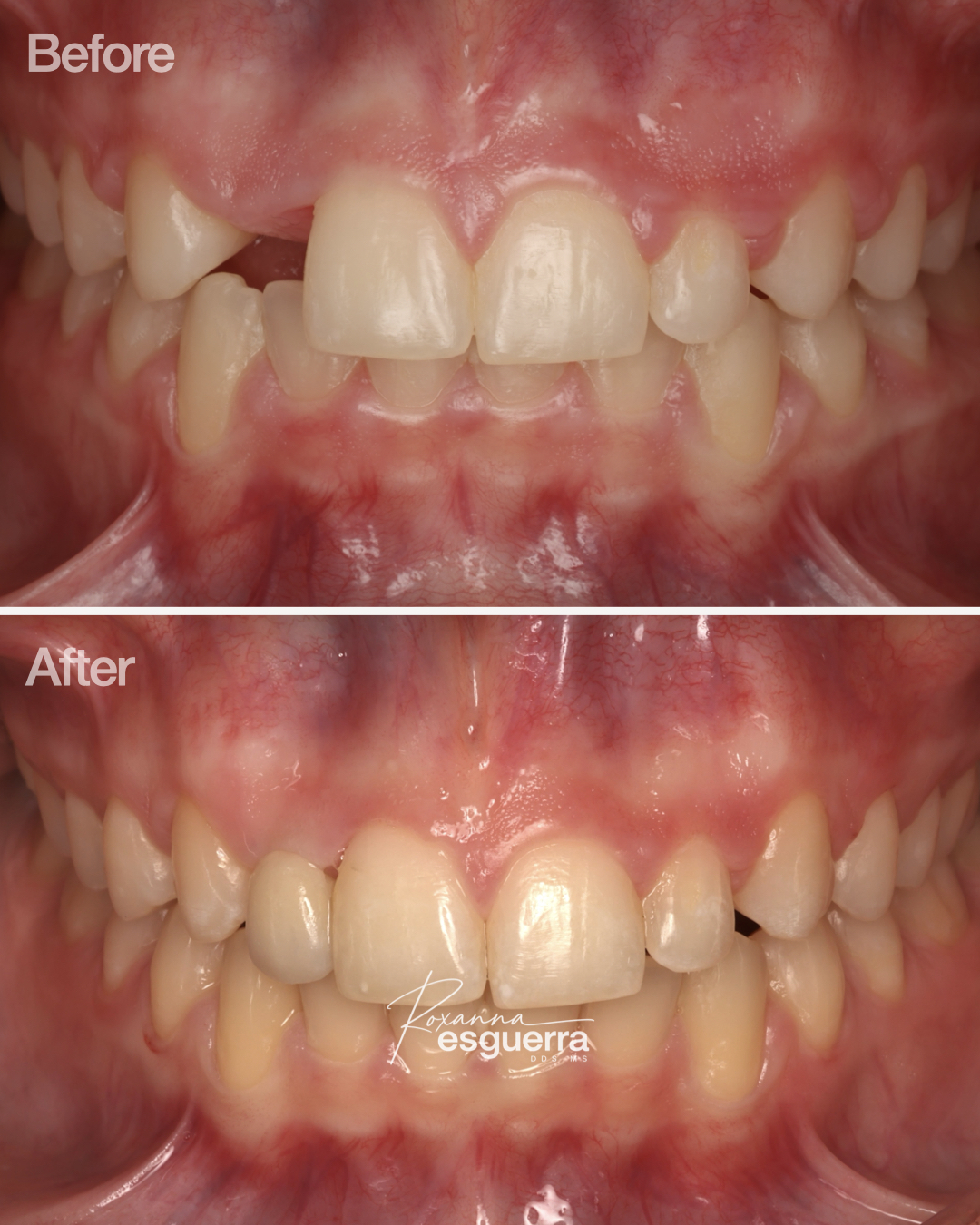
For adolescents who are still growing, a fixed non-implant restoration such as a Maryland bridge (shown below) may provide an attractive solution while preserving future treatment options.
Dental Implants and Cleft Palate
Dental implants can be an excellent option for some patients, but an implant is not automatically the best solution for a missing tooth associated with a cleft.
Previous bone grafting, available bone and soft tissue, facial growth, the position of adjacent teeth, and the location of the cleft all influence whether an implant is appropriate. Careful coordination between the orthodontist, surgeon, and prosthodontist is especially important before orthodontic appliances are removed or additional surgery is planned.
When Dentures Are Needed
Some patients have multiple missing teeth or may eventually become completely edentulous. Cleft anatomy, previous surgeries, altered bone contours, and communication between the mouth and nose can make conventional partial or complete dentures more challenging.
Advanced prosthodontic training can be particularly valuable in these situations. Treatment is individually designed around the patient’s anatomy, function, comfort, speech, and appearance.
Specialized Prosthetic Appliances
Prosthodontics can also play a role when an opening or functional deficiency remains between the oral and nasal cavities.
Depending on the patient’s needs, specialized appliances may include feeding appliances for infants, speech bulbs, palatal lifts, and other custom prostheses designed to assist with feeding, speech, or function. These appliances may be provided or coordinated with the patient’s cleft and craniofacial team.
Coordinated Care from Childhood Through Adulthood
Patients born with cleft lip or palate may receive care over many years. By the time definitive dental treatment is considered, considerable work may already have been completed by surgeons, orthodontists, speech-language pathologists, and other members of the cleft team.
Our goal is to build on that work.
Dr. Esguerra collaborates with the patient’s existing providers to plan the restorative phase of treatment. When multidisciplinary tertiary care is needed, treatment may also be coordinated with the University of Minnesota or another appropriate cleft and craniofacial center.
Whether treatment involves replacing a single missing tooth or managing more extensive dental needs, the goal is a healthy, functional, natural-looking result designed for the individual patient.
Our practice strives to ask questions, actively listen, and understand every patient’s unique needs before recommending treatment. You deserve to feel normal and made whole.
We Can Complete Your Smile!
Let us help you heal! Our caring staff is here to help you if you have any questions!