
Bruxism Treatments Duluth MN
Teeth Grinding & Jaw Clenching
Bruxism is repetitive jaw-muscle activity that can include clenching or grinding the teeth, or bracing the jaw. It can occur during sleep or while awake—and many people are unaware that they do it.
Clenching and grinding during sleep are surprisingly common. A recent systematic review and meta-analysis found a pooled prevalence of approximately 43% in adults when sleep bruxism was measured using polysomnography (an overnight sleep study).
Bruxism itself does not always require treatment. What matters is whether these forces are contributing to damage, discomfort, or risk to your teeth and dental restorations.
At our Duluth practice, evaluation begins with your history and what you have noticed yourself. We also look carefully for patterns that may suggest excessive or repetitive forces, including tooth wear, non-carious cervical lesions (NCCLs), gum recession, fractures, craze lines, and damage to existing dental work.
WHY SHOULD I SEEK TREATMENT FOR BRUXISM?
Tooth Wear — Repeated tooth-to-tooth contact can gradually wear away enamel, changing the shape, length, and appearance of your teeth.
Cracks & Fractures — Excessive or repetitive forces may contribute to craze lines, cracks, fractured teeth, and damage to fillings, crowns, veneers, or other restorations.
Changes at the Gumline — Gum recession and non-carious cervical lesions can have multiple causes. We evaluate these changes as part of the overall pattern of forces affecting your teeth rather than assuming bruxism is the sole cause.
Protecting Your Dental Work — Occlusal appliances aren’t only for patients who already have significant damage. We routinely consider them as a preventive measure to help protect natural teeth as well as crowns, veneers, implants, and more extensive restorative treatment.
Our goal isn’t to promise that we can “cure” bruxism. Our goal is to recognize its consequences, manage risk, and help prevent further damage.
Treatment Options
CUSTOM NIGHTGUARDS & OCCLUSAL APPLIANCES
There is no single nightguard that is right for every patient.
Depending on your teeth, bite, existing dental work, and treatment goals, Dr. Esguerra may recommend a hard appliance fabricated in our office, a digitally designed hard appliance, or a trilaminate appliance. Softer sports-guard-style appliances are used in limited situations when appropriate.
A professionally designed appliance creates a protective interface between the teeth and helps us manage how forces are distributed. Importantly, a nightguard protects against the effects of bruxism but does not necessarily stop the underlying clenching or grinding activity.
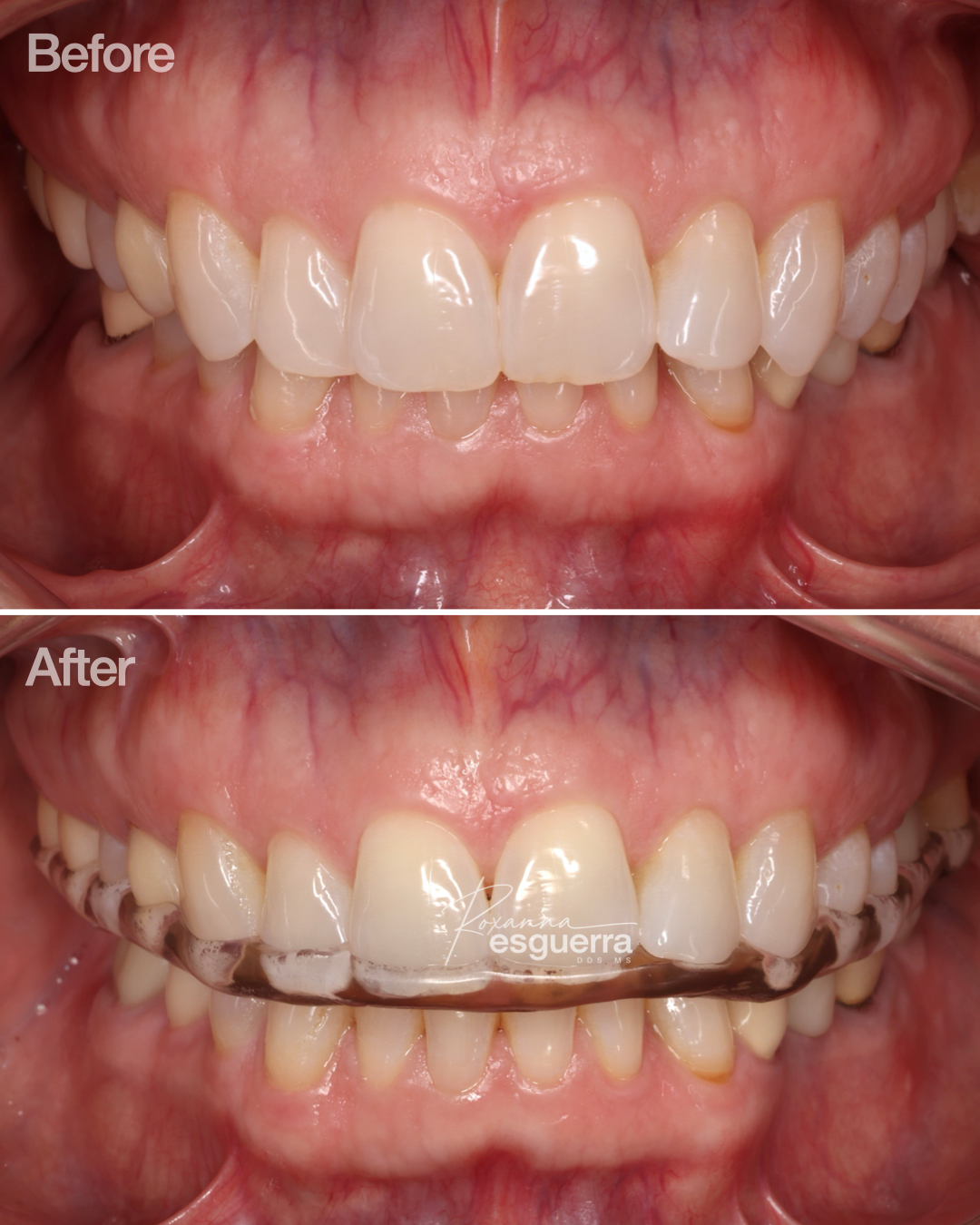
For patients who have invested in restorative dentistry, a custom appliance may be an important part of protecting that treatment. For others, we may recommend one before significant damage occurs.
Do You Grind Your Teeth?
Our caring staff is here to help you if you have any questions!
BRUXISM AND TMD ARE NOT THE SAME THING
Bruxism and temporomandibular disorders (TMD) are related topics, but they are not interchangeable diagnoses. Grinding or clenching does not automatically mean you have a temporomandibular joint disorder, and jaw pain does not prove that bruxism is its cause.
TMD can involve the jaw muscles, temporomandibular joints, or both. When pain or dysfunction is present, we evaluate it separately rather than assuming the bite or bruxism is responsible.
Treatment is individualized and conservative whenever possible. Depending on the diagnosis, management may include education and behavioral modification, exercises or physical therapy, an appropriate reversible appliance, dry needling, and strategies addressing sleep, stress, and other factors that can influence pain. Mindfulness, meditation, yoga, and other stress-reduction approaches may also be helpful components of care for some patients.
Persistent TMD pain is multidimensional. Successful management may involve more than treating a single tooth, muscle, joint—or the bite.
WHEN DAMAGE HAS ALREADY OCCURRED
Sometimes prevention is only part of the solution.
Significant wear and repeated fractures can change the appearance, function, and structure of your teeth. When tooth structure has already been lost, Dr. Esguerra can evaluate whether restorative treatment is appropriate—from restoring individual damaged teeth to comprehensive dental reconstruction when multiple teeth and the overall bite have been affected.
The first step is understanding what happened and why, so that anything we restore is designed with the future in mind.
REFERENCES
Zieliński G, et al. Global Prevalence of Sleep Bruxism and Awake Bruxism in Pediatric and Adult Populations: A Systematic Review and Meta-Analysis. Journal of Clinical Medicine. 2024;13(14):4259. The polysomnography subgroup reported a pooled adult sleep-bruxism prevalence of approximately 43%.
Manfredini D, Winocur E, Guarda-Nardini L, Paesani D, Lobbezoo F. Epidemiology of Bruxism in Adults: A Systematic Review of the Literature. Journal of Orofacial Pain. 2013;27(2):99–110.
Lobbezoo F, et al. International Consensus on the Assessment of Bruxism: Report of a Work in Progress. Journal of Oral Rehabilitation. 2018;45(11):837–844.
Melo G, et al. Bruxism: An Umbrella Review of Systematic Reviews. Journal of Oral Rehabilitation. 2019;46(7):666–690.