3D DENTAL IMAGING WITH i-CAT CBCT
Advanced Dental Technology Duluth MN
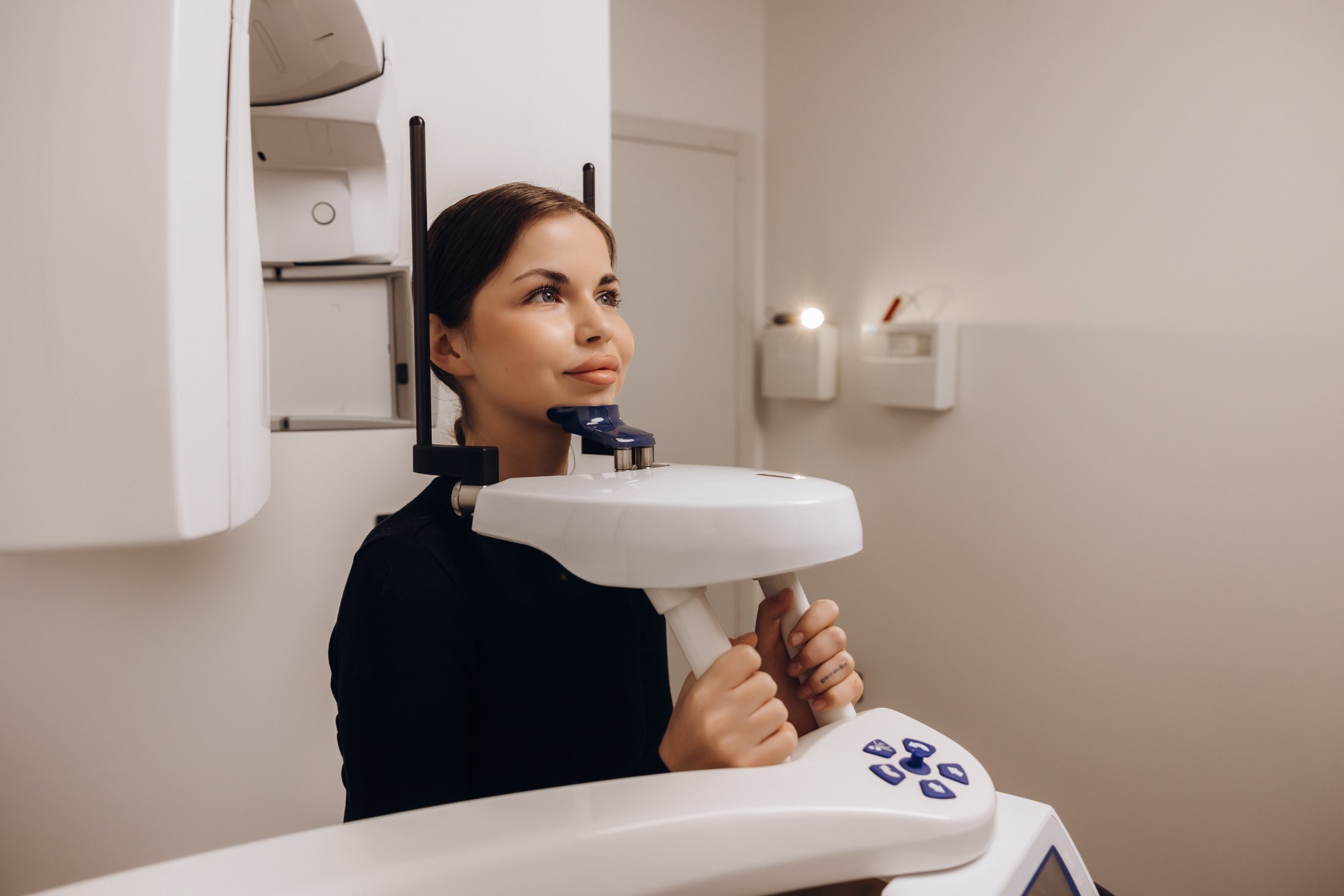
Dental Implant & Reconstructive Center uses an in-office i-CAT cone beam computed tomography (CBCT) scanner to create detailed three-dimensional images of the teeth, jaws, bone, and surrounding structures. Unlike conventional dental X-rays, which provide two-dimensional images, CBCT allows Dr. Roxanna J. Esguerra to evaluate anatomy in three dimensions when that additional information is helpful for diagnosis and treatment planning.
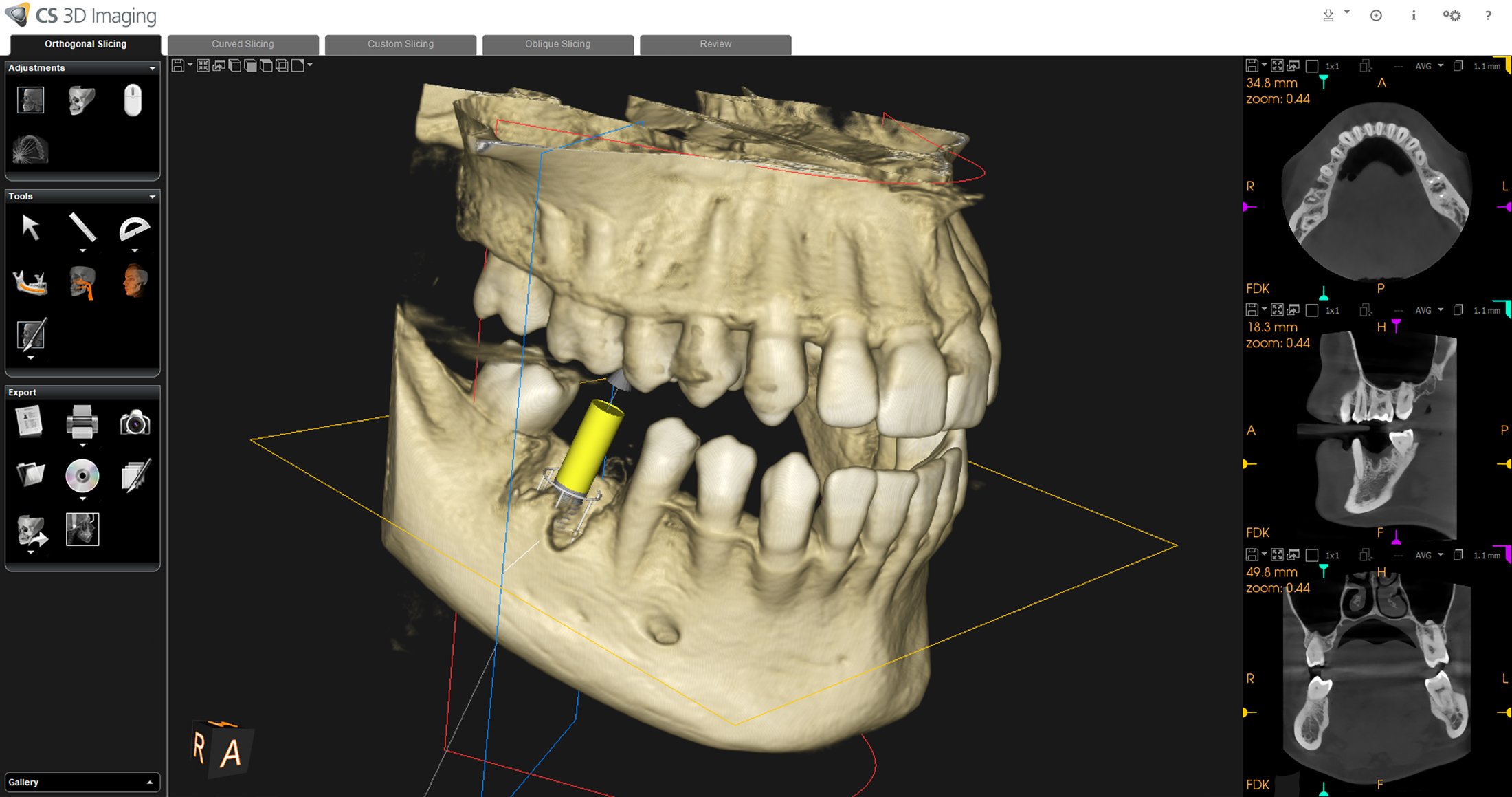
CBCT imaging is particularly valuable in dental implant treatment. Three-dimensional imaging allows Dr. Esguerra to evaluate available bone, the position of existing teeth and implants, and important anatomical structures before treatment begins. The scan can also be incorporated into digital implant-planning software to evaluate proposed implant positions in relation to the planned restoration.
For selected procedures, this digital planning may be used to design a CAD/CAM surgical guide that helps transfer the planned implant position to the clinical procedure. CBCT imaging may also be useful when evaluating existing implants, dental anatomy, pathology, or other conditions when conventional dental imaging does not provide all of the information needed.
Because the i-CAT scanner is located within our Duluth office, imaging can often be completed as part of the same visit and reviewed directly with you. Dr. Esguerra uses CBCT when clinically appropriate rather than as a replacement for conventional dental radiographs.
Planning treatment before treatment begins
One of the greatest advantages of three-dimensional imaging is the ability to bring multiple sources of information together during treatment planning. CBCT imaging can be combined with digital impressions and prosthetic planning to evaluate the relationship between the patient’s anatomy, the proposed implant position, and the planned restoration. For Dr. Esguerra, these technologies are tools that support a restoratively driven approach: beginning with the desired restorative outcome and working backward to determine the surgical and prosthetic steps needed to achieve it.
TECHNOLOGY WITH A PURPOSE
Technology is most valuable when it helps us better understand your individual needs, plan treatment thoughtfully, and communicate those plans clearly with you.
QUESTIONS ABOUT OUR TECHNOLOGY?
Have questions about CBCT imaging or how we use digital technology to plan your care? Our team is happy to help.