3shape trios 5 Intraoral Scanner Duluth
Digital Impressions
Dental Implant & Reconstructive Center uses the 3Shape TRIOS 5 intraoral scanner to create detailed three-dimensional digital records of the teeth, implants, soft tissues, and bite. In many situations, digital scanning allows us to obtain the information needed for treatment planning and fabrication without using conventional impression material.
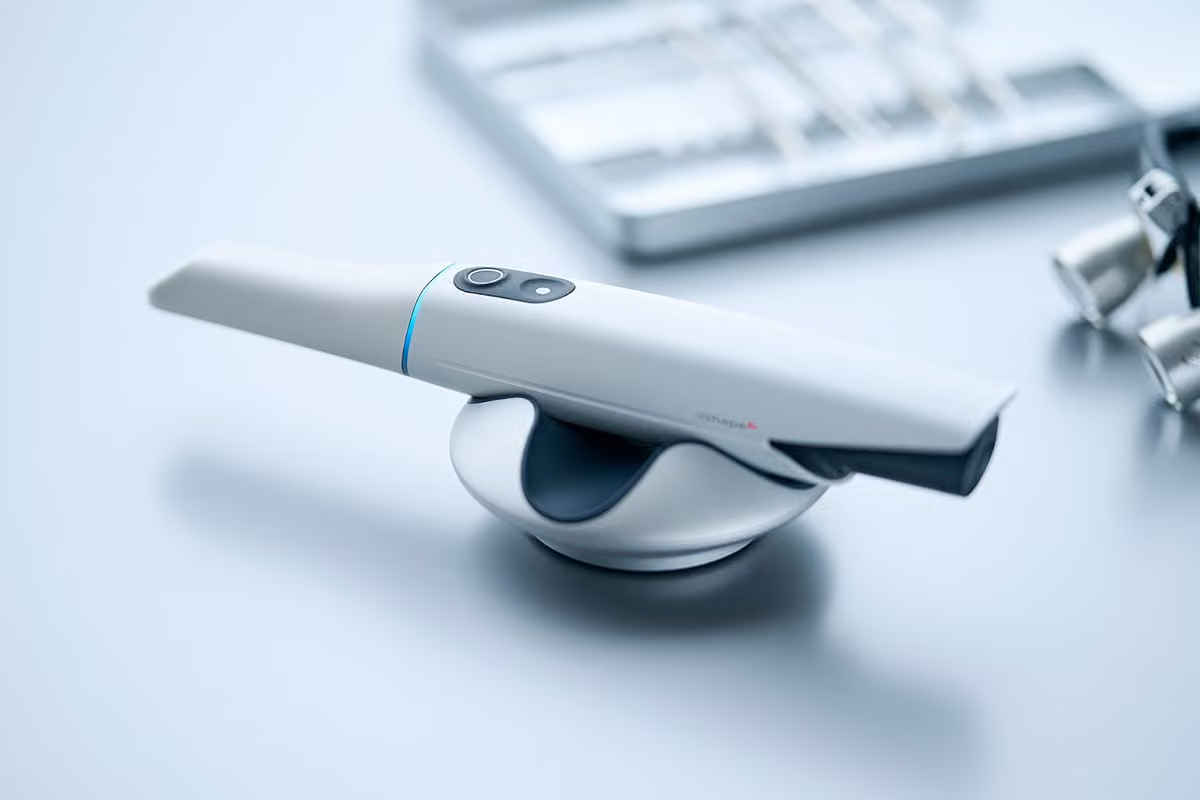
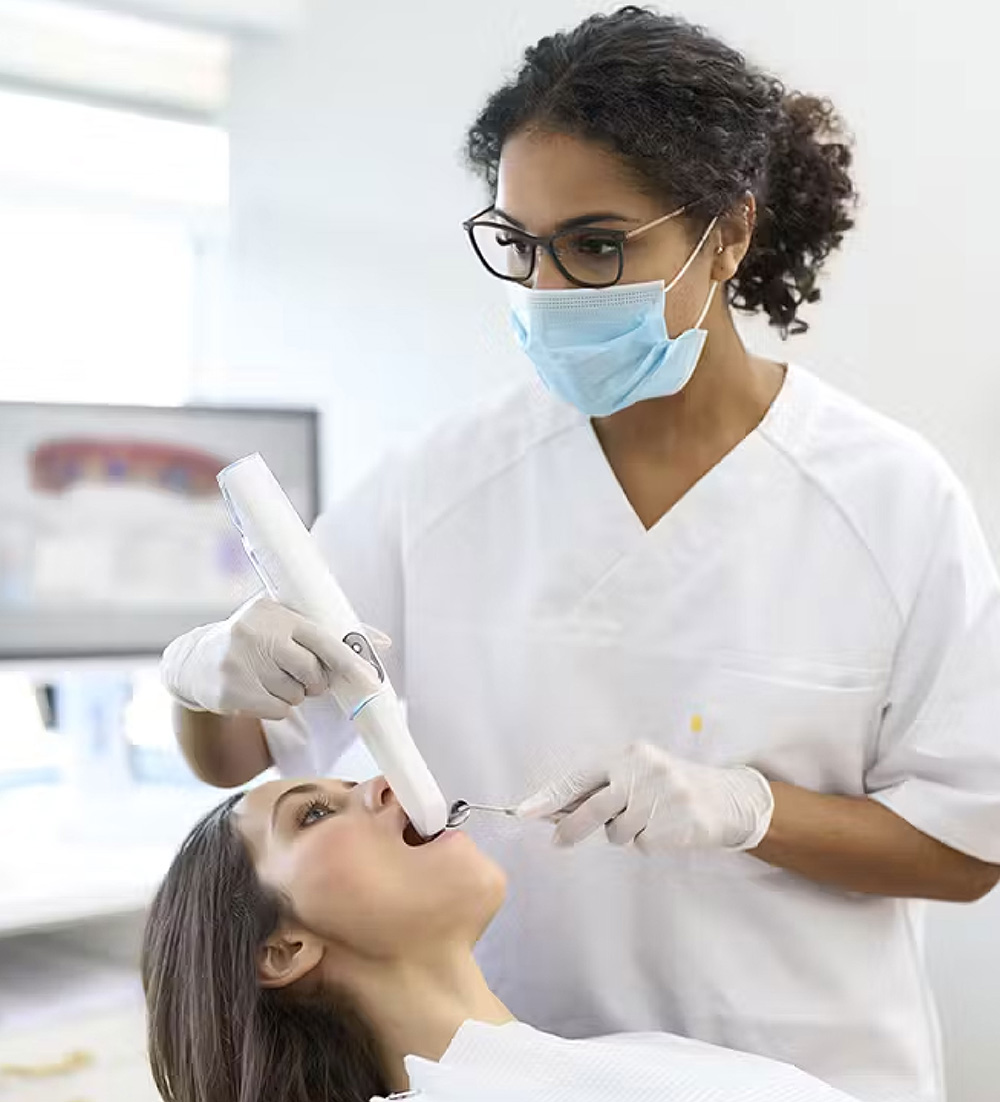
Instead of filling an impression tray with material, a small handheld scanner captures a series of images as it moves through the mouth. Specialized software combines these images to create a 3D digital model that can be viewed and evaluated on screen.
Patient Comfort
For many patients, digital scanning is a more comfortable way to make a dental impression. There is no tray filled with impression material, and areas can often be rescanned when additional information is needed rather than repeating an entire conventional impression.
This can be particularly helpful for patients who have difficulty tolerating impression materials or who have a sensitive gag reflex.
More than a Digital Impression
At our practice, intraoral scanning is more than a replacement for impression material. Digital records can become part of a larger treatment-planning workflow.
Depending on the treatment being considered, a TRIOS 5 scan may be combined with CBCT imaging, photographs, implant-planning software, and prosthetic information. Bringing these records together allows Dr. Roxanna J. Esguerra to evaluate the teeth, implants, soft tissues, bite, available anatomy, and planned restoration from multiple perspectives.
For implant treatment, digital impressions can also contribute to a restoratively driven workflow, helping connect the planned prosthesis with implant planning and, when appropriate, guided implant surgery.
From the Mouth to the Dental Laboratory
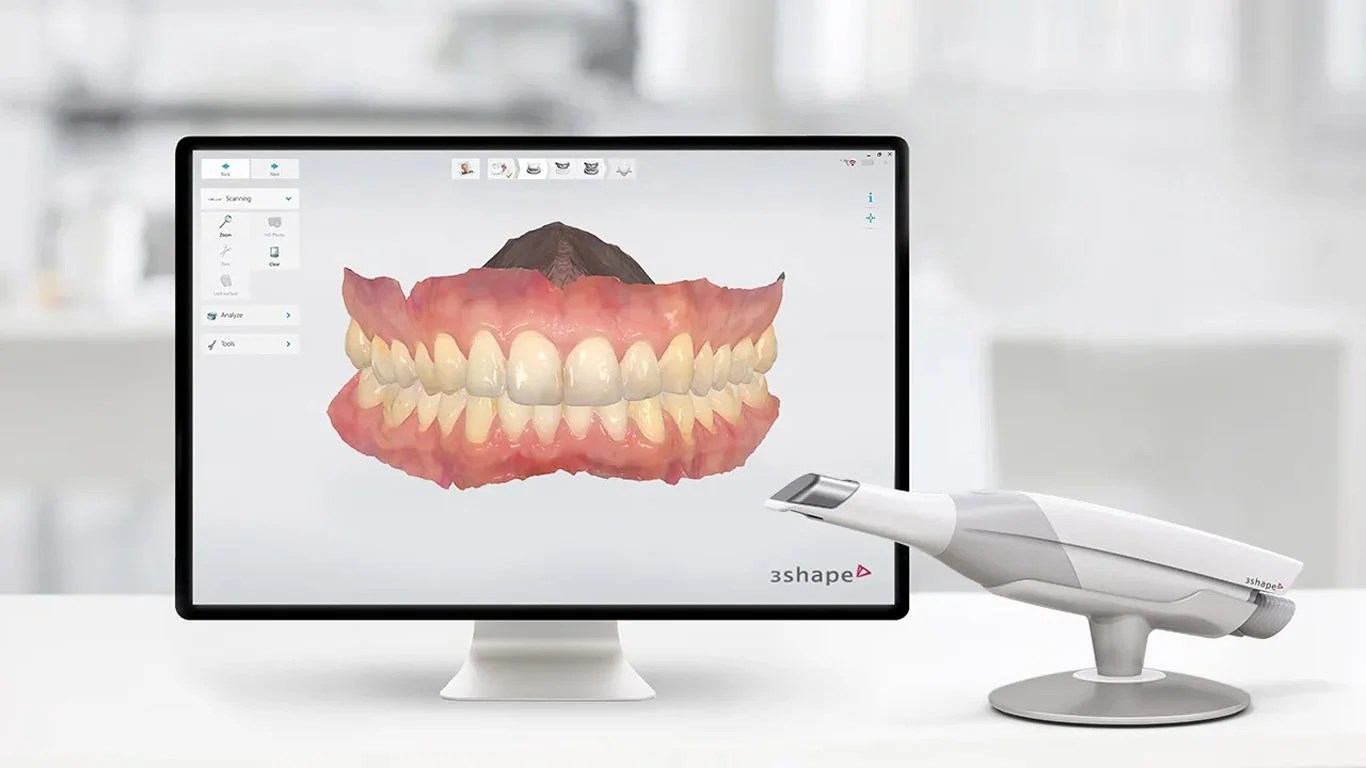
Digital scans can be transmitted electronically to dental laboratories and other digital workflows without first creating a conventional stone model. This allows detailed digital information to move directly from the clinical appointment into the restorative or laboratory process.
Our practice works with both our in-house laboratory and outside dental laboratories, depending on the restoration and treatment being completed.
When do we still use Conventional Impressions?
Digital technology does not mean that conventional impressions have disappeared.
Different clinical situations require different techniques. Dr. Esguerra selects the impression method based on the information needed, the type of restoration being made, the implants or teeth involved, and the individual clinical situation.
The goal is not to use digital technology simply because it is available. The goal is to use the technique that best supports the treatment being provided.
TECHNOLOGY WITH A PURPOSE
Digital technology is most valuable when it gives us better information, improves communication, and helps connect treatment planning with the care we provide.
Curious About The Advanced Technology We Utilize?
Call our office to learn more about how we use different technologies to bring you the best dental experience possible.